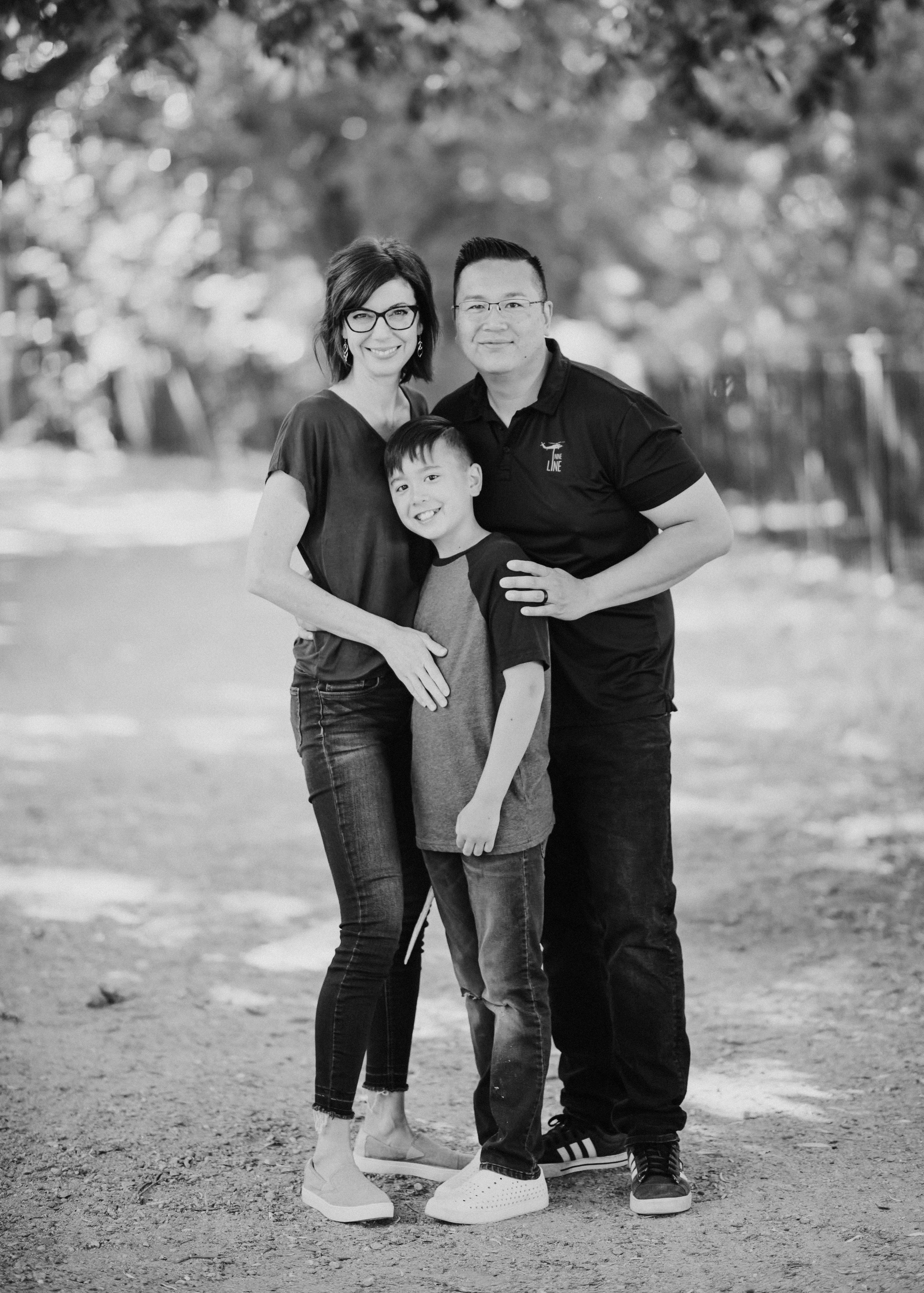
MEET THE AUTHOR
COLLEEN
Colleen is an editor and the author of In the Hands of a Fiercely Tender God and the children’s book on suffering, Out of the Shadow World (to be released early 2023). She enjoys dark-dark chocolate, side-splitting laughter, and half-read books piled bedside. She makes her home near Boise, Idaho, with her husband Eddie, their son Jeremy, and Willow the dog.

Cancer Update 8.23.25
Some of my most enjoyable conversations over the past two-plus decades have centered on the question, “How can you believe in a God who allows bad things to happen to good people?” In fact, some of my favorite convos have been with those who disagree with me over this question—not because I’m super smart or persuasive, but because I’ve lived at the crossroads of suffering and faith for so long, I welcome the chance to talk about the elephant in the room (and the pain behind the question).
Cancer update 2.20.25
The veil feels extra thin today… like gossamer or tulle. And while I may be living my best 90-year-old life right now (*snort*), it helps to know there’s a reality so much bigger and better than this present one—a fact that makes today deeply meaningful and worth living to the hilt.

I am a forgiver
I am a forgiver because I’ve been forgiven. My filth and my failures filled up every page ofevery book on every shelf of the world’s largest library. Expansive, unedited, detailed and damning, with new volumes added every day.

Cancer Update
I can’t believe it’s been over four months since my last update when I said, “I hope to write another update soon…” I know my silence has been worrisome, so I do want to be more faithful to communicate. But I’m still finding it hard to put this phase of things into words. As a stop-gap measure, I’m gonna copy-and-paste my July 29 Instagram update below. Strangely enough, right now it’s easier for me to write within the constraints of a word limit like Instagram’s… but I do hope to send a more heartfelt update soon: a sooner-than-four-months-from-now soon. 😉
Writing Workshop this January
I’ve officially been off treatment for a couple of months, and I couldn’t be more grateful. This extended break has given me a chance to do something I’ve missed doing: teach writing! Below is information about the online workshops I’m hosting. My January Tuesday workshop has already filled up, so I’ve added a second workshop on Thursday evenings. Here are the details:
To chemo or not to chemo?
When I was first diagnosed with breast cancer in 2017, I was adamantly against
chemotherapy and resolved to heal myself with the help of an alternative doctor/clinic/protocol. I’d spent the last decade eating like a nutritionist (“let food be thy medicine!”), ridding my home of chemicals, and working with fantastic naturopaths. I knew firsthand the benefits of addressing disease systemically—not just covering up symptoms with meds.
A story for kids (especially those who are hurting)
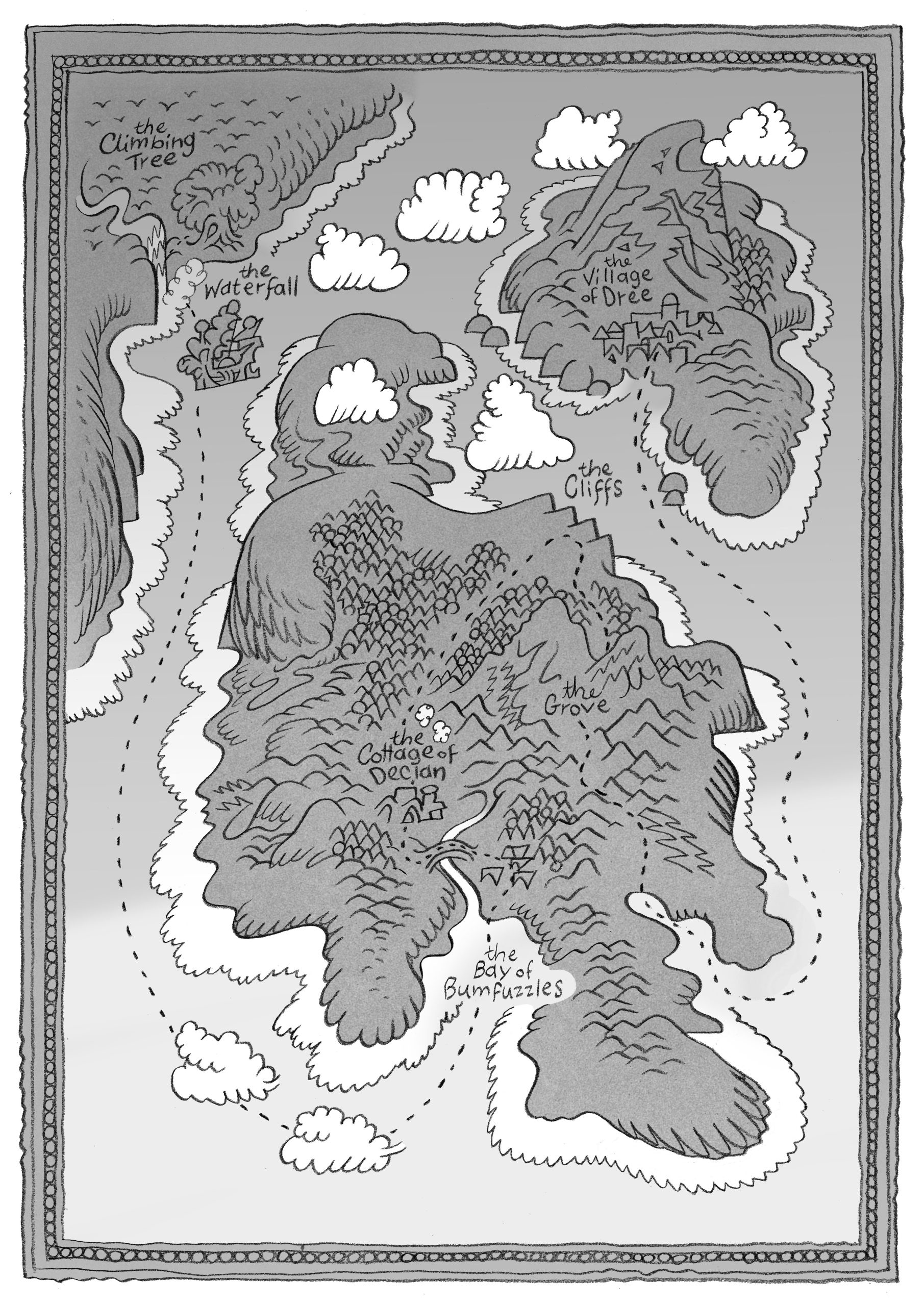
Several years ago I wrote a story for my son whose world had been turned upside-down by both chronic illness and my first cancer diagnosis. As a mom, I longed to create a gentle place for Jeremy to process his grief, so I asked God to help me do things like keep an open dialogue with him, create joy in our family even through the hardest days, and track down support for him within our community. I also wanted to address his suffering in a creative, disarming way, so I asked God to help me wield the language of story, putting words to those tenderest places of a child’s grieving heart.
Cancer Updates 2023
Okay, I’ve guzzled two cups of organic black decaf low-acid mold-free coffee and am ready to attempt an update. ? I’ll say it again: There’s no vocab for this journey, so I just kind of stab at words and pray they make a wee bit of sense.
A few thoughts on weakness…
Okay, I’ve guzzled two cups of organic black decaf low-acid mold-free coffee and am ready to attempt an update. ? I’ll say it again: There’s no vocab for this journey, so I just kind of stab at words and pray they make a wee bit of sense.
Aging for the good of others
I grew up on the doorstep of Hollywood and Orange County, the beauty capitals of the world. When out-of-state friends visited, they were stunned by the “beauties per capita” of my neighborhood. I’m not sure if it was this saturation of perfectly curated faces and bodies, or a hardwired desire within me, but as a teenager I prayed, “God, please make me beautiful. Please. And if you do, I’ll use my beauty to glorify you.” I laugh now at my young, self-serving prayer, but even to this day—on the cusp of 47 years old—I long to be beautiful. However, as the forties have proven, aging isn’t a kind process, and wrinkles don’t turn heads. Nor does a terminal cancer diagnosis filled with harsh treatments. My once firm-and-glowing skin has been replaced by the relentless effects of gravity, accelerated by years of chemotherapy. ~ ~ ~ At 30 years old, my (not yet sagging) jowls almost dropped when one of my work colleagues, also 30, outlined her lifelong Botox plan to me. Botox was still the new kid on the block, unvetted, eyed with suspicion. I looked at my friend’s face—still glowing with youth—and grieved that she was so fearful of aging. Little did I know that within ten years, Botox—and fillers and peels and the knife—would become as common and accessible as a gym membership, and women in their twenties would begin their muscle-paralyzing, face-altering regime in a race against time. I would watch countless actresses freeze their faces into expressionless but photo-perfect stills. I would also watch older Christian women suddenly look ten years younger, with plump cheeks and taut mouths. And I would look into the mirror myself and wonder, What if I could get rid of these sagging jowls and deepening lines? And what happens if I choose not to do anything and end up looking twenty years older than my peers? ~ ~ ~ Before my first cancer diagnosis at age 41, I was often told how young I looked for my age. I think subconsciously it made me feel special, perhaps even a bit superior, to look younger than some of my peers. But a five-year journey through cancer has changed all that: I’ve lost my head full of hair—twice—along with my eyebrows and eyelashes, healthy skin, and bright eyes. There have been weeks at a time when I’ve looked like an 80-year-old man. These losses have touched the very core of my identity as a woman, revealing just how deep my desire for youthful beauty truly is. I’ve alternately grieved and feared, felt shame and sometimes even despaired over my reflection in the mirror. But my grieving has prompted me to pray a big prayer: God, give me a beauty that doesn’t make sense to this world—a beauty that shines and even grows through all of this, and that ultimately points to you. When people see me, let them think, She’s not beautiful by cultural standards, but she has a compelling beauty—and I want to know where it comes from. Even as I’ve mourned the loss of my youthful features and the way chemo has hyper-aged my face, I’ve marveled to watch God answer my prayer in spades. He’s slowly been freeing me from my self-obsession, working miracles in my heart and forging a new confidence in me that literally shows on my face. He’s tenderly held my face in his hands and said, Those who look to Me are radiant with joy; their faces will never be ashamed. (Psalm 34:5) ~ ~ ~ As I look to God, my face becomes more radiant and unashamed, and this results in a beauty that doesn’t begin and end with me. My face was created, with all its intricate muscles and movements, to be a powerhouse of joy, empathy, understanding, and love. In his book, Transforming Fellowship, Chris Coursey writes, In the Bible, to have God’s face is to have life, joy and blessing while the absence of God’s face is equated with death, abandonment and rejection. It is no accident that the face is where joy starts and stops . . . With forty-three muscles, the face is an ideal platform to convey our love and express our delight toward one another” (p.52). Each of our facial muscles were designed by God for a purpose, and when they are working together for that purpose, true indestructible beauty results. It’s a beauty that is relational and others-centered. It’s a beauty that doesn’t walk into a room worrying, “What do they think about how I look?” but rather, “How can I connect with and care for them?” Botox and fillers and peels and the like are not inherently moral issues (I’m not writing this article to convince you never to use them). But for me, they present three intrinsic problems: by altering my face to perpetually erase signs of my true age, I’m communicating— 1. “I’m not grateful for every year I’ve been given here. I’d like to pretend I’ve only lived 30 years instead of 47.” (In light of a terminal diagnosis, this feels almost tragic.) 2. “I’m willing to prioritize feeling better about myself at the expense of caring for the people around me.” 3. “This life, this moment, is what matters most.” With my remaining days here, I want to wield the power of my face for the good of others. I want to use every muscle and wrinkle and line to express compassion to a hurting friend, joy at seeing another human, even hilarity over the comedic aspects of life! I want my husband and son to see my love for them all over my face, to see how happy I am to be with them. Can you imagine if we women leaned into this kind of loving beauty? What if we refused to live under the crushingly high standards society has set for us—superficial-beauty standards that require us to alter the very function of our faces to feel good about ourselves—and instead celebrated aged beauty, wrinkled joy, and faces that use all 43 muscles to love others? What if we chose
Why hasn’t God healed me?
I used to think suffering was meant to teach me lessons—hard but good life lessons—and as soon as I learned what God wanted me to learn, my suffering would come to an end. I see things so differently now. Suffering isn’t a classroom—it’s an invitation into the heart of God. The greatest thing I can do with my life is love God and love people (Matthew 22:36-40), so whatever furthers that goal has to, ultimately, be insanely good for me—and for those my life touches. And in my own experience, it has been pain and grief and loss and long waits and distress and brokenness that have best helped me experience Jesus’ perfect love—and best enlarged my heart to love others in a way I never could have imagined twenty-five years ago. (We see this reality all over the Word. See Philippians 3:10 and Psalm 119:71 for starters.) I haven’t effortlessly embraced hardships in my life, and I haven’t easily accepted cancer. Not by a long shot. After both diagnoses, I wrestled long and hard with God, with lots of sobbing sessions in the dark corners of my closet, processing with family and besties and counselors, searching Scripture and asking hard questions. Lots of sleepless nights grieving harder than I thought my heart could endure. But if, for me, terminal cancer is the way into greater love for both God and people—then it is a gift, not a linear lesson to be learned as quickly as possible. My present suffering will only get harder and harder, and it won’t end until I die, but every day I’m pressed further and further into God’s heart—and that enables me to walk through “the valley of the shadow of death” with a God who also “leads me beside quiet waters” and “restores my soul” (see Psalm 23). Mysteriously enough, the process of walking with him through that valley and beside those waters is what teaches me how to better love and care for others. God may heal me yet, but only if my healing presses me further into Love. Only if healing can eternally accomplish what terminal cancer cannot. So my prayer has not been for a miracle, but for more days here to love God and love people, and I fight toward that end, especially for the sake of my husband and my son. The pressing question is no longer, “Why doesn’t God heal me?” but, “What if healing would rob me of a life of love?”